Personal Loans for Self-Employed Californians: What You Need to Know
Navigating Eligibility, Regulations, and Application Steps for Self-Employed Borrowers
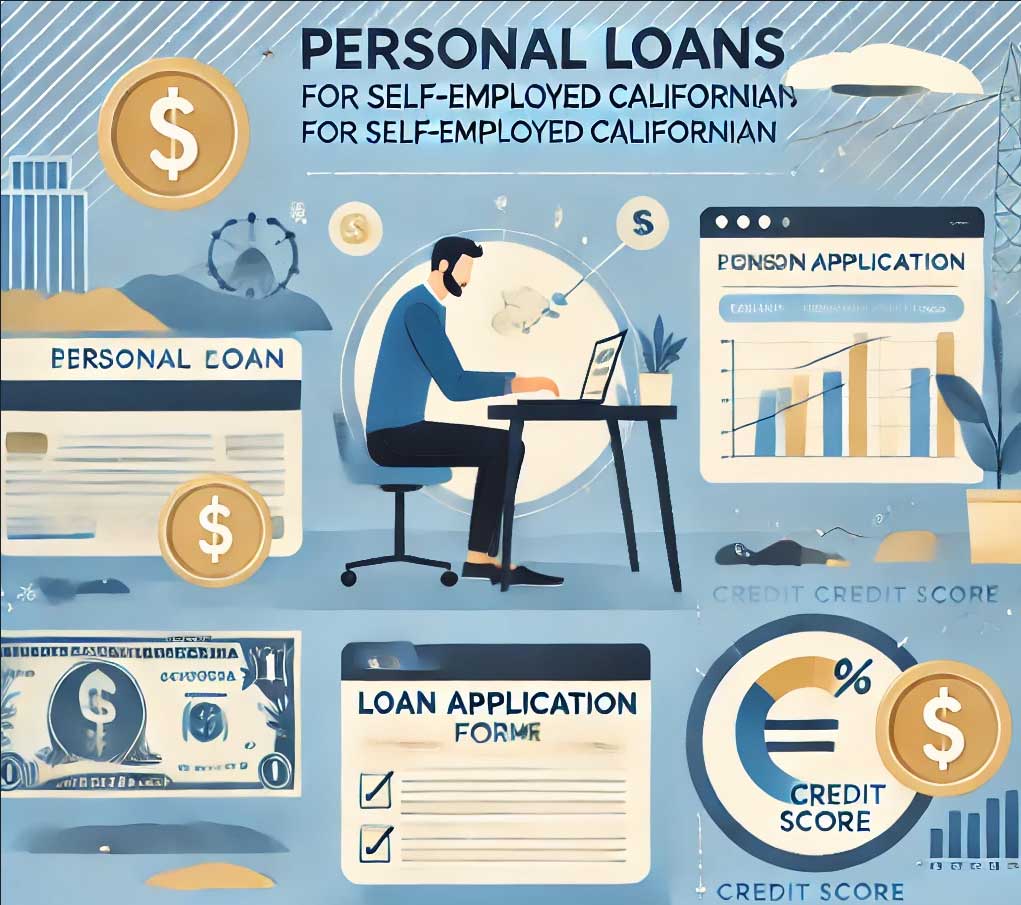
For self-employed Californians, securing a personal loan can feel like an uphill battle. Without traditional W-2 income documentation, many independent professionals—freelancers, small business owners, and gig workers—struggle to meet lender requirements. However, personal loans for self-employed individuals in California are available if you understand the qualification process, state regulations, and key financial strategies.
This guide covers:
✅ Eligibility requirements for self-employed borrowers
✅ California state lending laws affecting personal loans
✅ Real-world examples of self-employed applicants
✅ Step-by-step loan application process
By the end, you’ll have a clear roadmap to securing the best self-employed personal loan in California.
Eligibility Requirements for Self-Employed Personal Loans
Lenders assess loan applications based on income stability, credit history, and debt-to-income (DTI) ratio. Unlike traditional employees, self-employed borrowers must provide alternative documentation to prove financial stability.
📊 Latest Statistics on Self-Employed Loan Approvals in California
- In 2024, 67% of self-employed applicants faced stricter documentation requests.
- Only 52% of independent workers were approved for unsecured personal loans, compared to 78% of W-2 employees.
- The average self-employed borrower secured an APR of 12-28%, depending on credit score and income verification.
✔️ Key Qualification Factors
| Requirement | Details for Self-Employed Applicants |
|---|---|
| Credit Score | Minimum 620 (700+ for lower interest rates) |
| Proof of Income | Tax returns, bank statements, or invoices |
| Debt-to-Income Ratio | Below 43% preferred |
| Business Stability | Minimum 1-2 years of self-employment history |
| Collateral (If Secured) | Vehicle, savings, or real estate (if applicable) |
🔹 Tip: If your income fluctuates, consider applying after a high-earning period to strengthen your financial profile.
California State Lending Regulations for Self-Employed Borrowers
California has strict lending regulations designed to protect borrowers from predatory loans. Here’s what self-employed individuals need to know:
📌 Key State Regulations
✅ Interest Rate Caps: For loans under $10,000, California caps interest rates at 36% APR to prevent excessive costs.
✅ Fair Lending Laws: Lenders cannot deny loans based solely on self-employment status.
✅ Income Verification Rules: Under California Finance Code §22303, lenders must verify ability to repay—which means more documentation for self-employed applicants.
✅ Licensed Lenders Only: Only lenders registered with the California Department of Financial Protection and Innovation (DFPI) can legally offer personal loans.
💡 Tip: Always verify that your lender is state-licensed to avoid scams or illegal lending practices.
Real-World Examples of Self-Employed Loan Applicants
🛠️ Case 1: A Freelancer Seeking Debt Consolidation
- Name: Maria, 32, Graphic Designer
- Income: $85,000 (varies month-to-month)
- Loan Purpose: Consolidating credit card debt
- Challenge: Inconsistent monthly income
- Solution: She provided two years of tax returns and bank statements showing an average income of $7,000/month. She secured a $15,000 loan at 11.5% APR with a 3-year repayment term.
🚚 Case 2: A Small Business Owner Expanding Operations
- Name: Jason, 40, Owner of a Catering Business
- Income: $120,000/year
- Loan Purpose: Purchasing new equipment
- Challenge: High existing business expenses
- Solution: He opted for a secured personal loan using his van as collateral, securing a lower 9.8% APR on a $25,000 loan.
🔹 Tip: If your personal income is low, using business revenue and assets to secure a loan can improve approval chances.
Step-by-Step Loan Application Process for Self-Employed Californians
✅ Step 1: Check Your Credit Score & Report
Before applying, review your credit score and correct any errors. A score above 700 increases approval chances.
✅ Step 2: Gather Income Documentation
Self-employed applicants typically need:
- Two years of tax returns (IRS Form 1040, Schedule C)
- Recent bank statements (last 3-6 months)
- Invoices, 1099 forms, or profit & loss statements
✅ Step 3: Compare Lenders & Get Prequalified
Use lender comparison tools to check rates without affecting your credit score. California-based lenders offering self-employed personal loans include:
| Lender | Loan Amount | APR Range | Repayment Terms |
|---|---|---|---|
| Wells Fargo | $3,000-$100,000 | 7.99%-23.99% | 12-84 months |
| SoFi | $5,000-$100,000 | 8.99%-24.99% | 24-84 months |
| Upgrade | $1,000-$50,000 | 9.99%-35.99% | 24-60 months |
| OneMain Financial | $1,500-$20,000 | 18.00%-35.99% | 24-60 months |
✅ Step 4: Submit Your Application
Provide your personal details, income verification, and requested loan amount. Many lenders approve applications within 24-48 hours.
✅ Step 5: Review Terms and Accept the Offer
Carefully examine:
- APR and monthly payment
- Loan fees (origination fees, late penalties)
- Prepayment penalties (if applicable)
💡 Tip: If denied, consider applying with a co-signer or opting for a secured loan.
Conclusion: Taking the Next Steps
Getting a self-employed personal loan in California requires extra documentation and preparation, but with the right approach, you can secure a loan that fits your needs. By maintaining a strong credit score, organizing financial records, and comparing lenders, self-employed professionals can access funding for personal and business-related expenses.
🚀 Ready to Apply?
📌 Compare lenders today and find a California-licensed personal loan provider that meets your needs.
Important Disclosure
Loan qualification and terms vary based on lender policies, credit history, and income verification. Rates and eligibility requirements are subject to change. Always review lender terms before applying.
Important Disclosure
Loan qualification and terms vary based on lender policies, credit history, and income verification. Rates and eligibility requirements are subject to change. Always review lender terms before applying.