Personal Loans in California vs. Credit Cards : Which One is Right for You?
Master the Loan Qualification Process, Compare Lenders, and Secure the Best Deal!
Personal Loans in California vs. Credit Cards
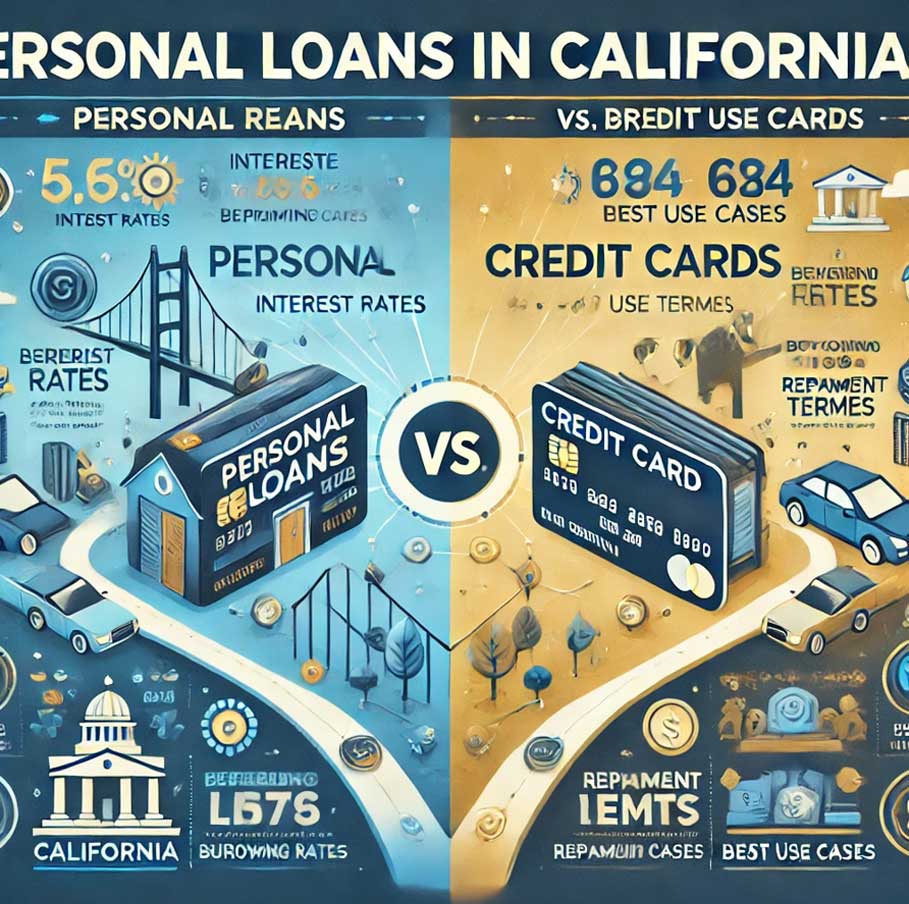
When facing a financial decision, choosing Personal Loans in California vs. Credit Cards can be challenging. Both options provide quick access to funds, but they come with different benefits, interest rates, and repayment structures. Understanding their differences can help you make the best financial decision for your needs.
In this guide, we’ll compare California personal loans and credit cards based on key factors like interest rates, repayment terms, borrowing limits, and best use cases. If you’re wondering which option is best for you, keep reading!
What is a Personal Loan?
A personal loan is a lump sum of money borrowed from a bank, credit union, or online lender. It is repaid over a fixed term with consistent monthly payments. California personal loans can be used for various purposes, including debt consolidation, medical bills, home improvements, or major purchases.
Pros of Personal Loans:
- Lower Interest Rates: Personal loans generally have lower interest rates than credit cards, especially for borrowers with good credit.
- Fixed Repayment Terms: Set monthly payments over a specified period make budgeting easier.
- Higher Borrowing Limits: Personal loans often allow borrowers to access larger amounts than credit cards.
- No Continuous Debt Cycle: Unlike credit cards, personal loans have a clear end date.
Cons of Personal Loans:
- Fixed Repayment Schedule: Missing payments can lead to late fees and damage your credit score.
- Origination Fees: Some lenders charge fees for processing the loan.
- Approval Time: While some lenders offer fast approvals, others take a few days for loan disbursement.
What is a Credit Card?
A credit card is a revolving line of credit that allows you to borrow money up to a specific limit. You can make purchases and pay them off over time or in full each month. Interest is charged on any unpaid balance.
Pros of Credit Cards:
- Flexibility: You can borrow as needed without applying for a new loan.
- Rewards & Cashback: Many credit cards offer cashback, travel rewards, and other perks.
- Builds Credit History: Responsible usage improves your credit score.
- Interest-Free Period: If you pay your balance in full each month, you can avoid interest charges.
Cons of Credit Cards:
- High Interest Rates: Interest rates can range from 15% to 30% or more, making long-term borrowing expensive.
- Temptation to Overspend: A revolving credit limit can lead to accumulating unnecessary debt.
- Variable Payments: Monthly payments fluctuate based on usage, making budgeting more difficult.
Key Comparisons: Personal Loans vs. Credit Cards in California
1. Interest Rates
- Personal Loans: Typically have lower interest rates, ranging from 6% to 36%, depending on credit score and lender.
- Credit Cards: Interest rates are generally 15% to 30%, and interest compounds if balances are not paid in full.
2. Loan Amount & Credit Limits
- Personal Loans: Borrowers can access amounts ranging from $1,000 to $100,000.
- Credit Cards: Limits vary based on creditworthiness but typically range from $500 to $25,000.
3. Repayment Terms
- Personal Loans: Have fixed terms ranging from 6 months to 7 years.
- Credit Cards: Offer revolving credit, with minimum payments required each month.
4. Best Use Cases
- Personal Loans: Ideal for large expenses like home renovations, medical bills, or debt consolidation.
- Credit Cards: Best for everyday purchases, emergencies, and short-term borrowing.
When to Choose a Personal Loan in California
A personal loan in California is the right choice if you:
- Need a large loan amount for a major expense.
- Want a fixed repayment schedule with predictable payments.
- Have high-interest credit card debt and want to consolidate it into a lower-rate loan.
- Need funds for a specific purpose, such as a wedding, home renovation, or medical bill.
When to Choose a Credit Card
A credit card is the better option if you:
- Need a flexible spending limit for everyday expenses.
- Can pay off the balance in full each month to avoid interest.
- Want to earn rewards and cashback on purchases.
- Need a quick financial solution without a lengthy application process.
Tips for Choosing the Right Financial Option
1. Check Your Credit Score
Your credit score plays a significant role in determining the interest rates you qualify for. If you have good credit (700+), you may get a low-interest personal loan or a credit card with excellent rewards.
2. Compare Interest Rates & Fees
- Look for personal loans with low APRs and no hidden fees.
- Find credit cards that offer 0% introductory APR periods for balance transfers.
3. Consider Your Financial Goals
- If you need a structured repayment plan, a personal loan is better.
- If you need ongoing access to credit, a credit card is more flexible.
4. Avoid Long-Term Credit Card Debt
If you tend to carry a balance on your credit card, a personal loan can help consolidate that debt into a lower, fixed interest rate.
Conclusion: Which One is Right for You?
Both personal loans in California and credit cards have their advantages and drawbacks. If you need a large sum with fixed repayments, a personal loan is likely the better choice. However, if you want spending flexibility and rewards, a credit card may be more suitable.
Evaluate your financial needs, compare options, and choose wisely to maintain good financial health. Whether you go with a California personal loan or a credit card, responsible borrowing is the key to financial success.
Ready to Apply?
If you’re looking for the best personal loans in California, compare rates today to find the lowest APR and most flexible terms!